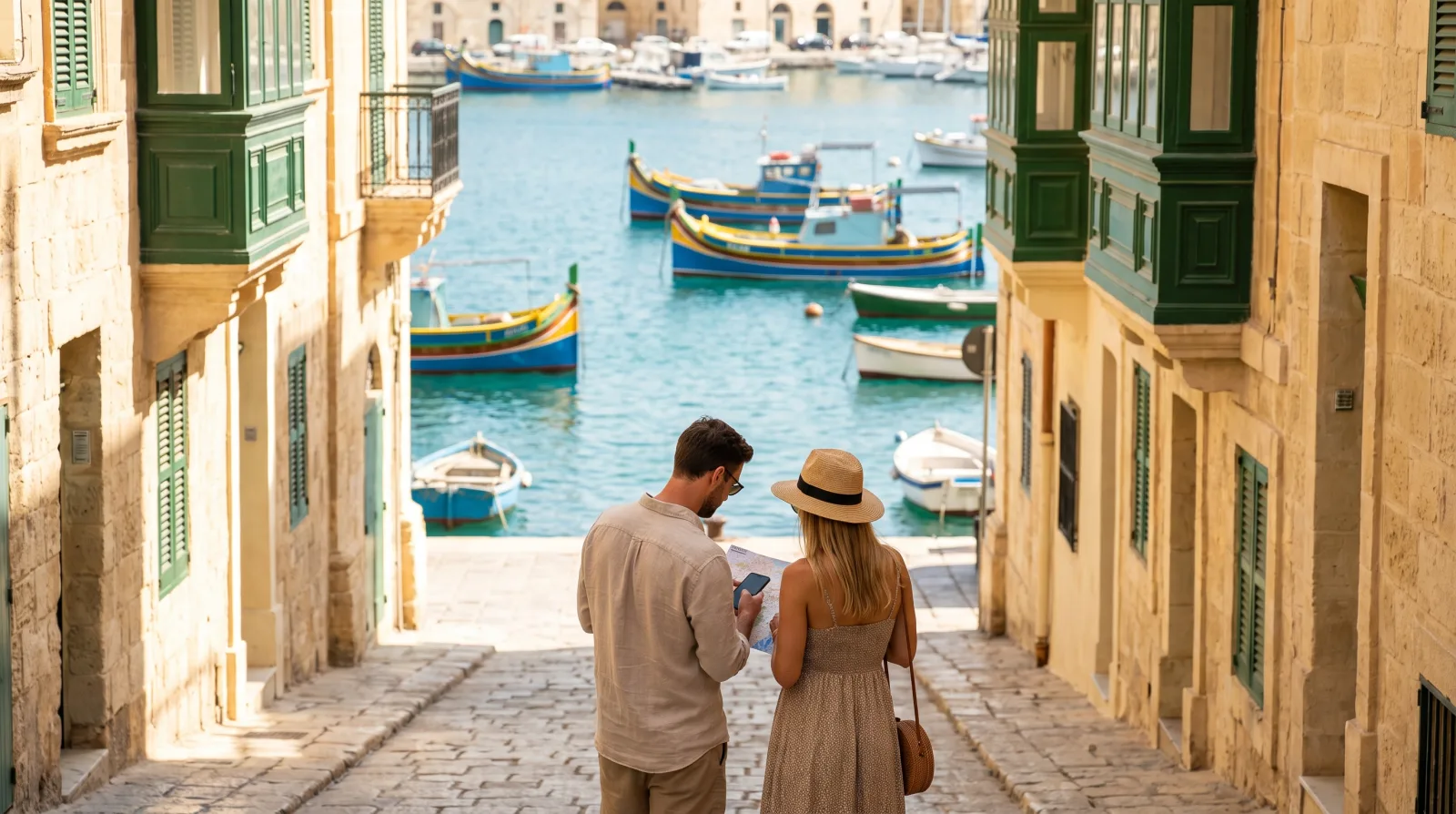
Attract Tourists Through Organic Search in Malta


Organic search marketing is the practice of earning unpaid search engine visibility to attract tourists through organic search results rather than paid ads. For Malta tourism boards and local business owners, this means appearing when travelers type queries like "best things to do in Valletta" or "Malta diving tours" into Google. Paid ads stop the moment your budget runs out. Organic visibility compounds over time, delivering qualified visitors who are already planning a trip. Maltaseo has worked with Malta businesses for over ten years and consistently sees that organic traffic drives higher booking intent than any paid channel.
What essential SEO components must Malta tourism businesses focus on?
Search engine optimization for tourism covers five core pillars. Each one directly affects how many travelers find your business before they book.
- Keyword research with travel intent. Generic terms like "Malta holiday" attract browsers. Terms like "Malta liveaboard diving October" attract buyers. The difference in conversion rate between the two is significant.
- Content creation aligned with search intent. Seasonal, intent-driven content outperforms evergreen content for tourism sites because traveler needs shift from inspiration to planning to booking across the year.
- Technical SEO foundations. A clean XML sitemap split by content type (attractions, tours, accommodations) helps Google crawl and index new seasonal pages faster. Structured sitemaps with canonical URLs prevent duplicate content from diluting your rankings.
- Local SEO and Google Business Profile. For any business tied to a physical location in Malta, Google Business Profile completeness directly affects local pack rankings. Incomplete profiles lose ground to competitors who fill every field.
- Structured data markup. JSON-LD schema for tours, events, and FAQs makes your pages eligible for rich results in Google, which increases click-through rates without requiring a higher ranking position.
Pro Tip: Use Google's Rich Results Test to validate your schema markup before publishing. Errors in structured data silently disqualify your pages from rich snippet eligibility.
Site speed matters as much as content for tourism pages. Travelers searching on mobile in Malta or abroad will abandon a slow page within seconds. Page speed is a confirmed Google ranking signal, and it directly affects bounce rate on high-intent landing pages.

How to conduct keyword research specifically for tourism in Malta?
Keyword research for Malta tourism requires separating informational queries from transactional ones. Informational queries ("what to see in Gozo") bring readers early in the planning phase. Transactional queries ("book boat tour Malta") bring buyers ready to convert. You need both, but they require different page types and content strategies.
- Start with Google Search Console. Filter your existing impressions data by queries containing Malta-specific place names: Valletta, Mdina, Gozo, Comino, the Blue Lagoon. These show you what travelers already associate with your location.
- Identify long-tail, seasonal keywords. "Malta Christmas markets 2026" and "Valletta spring festivals" are low-competition, high-intent phrases. They attract travelers at a specific moment in their planning cycle.
- Map keywords to intent phases. Group your keywords into three buckets: inspiration (broad destination queries), planning (activity and logistics queries), and booking (price, availability, and reservation queries). Each bucket needs its own page type.
- Avoid generic destination terms. Ranking for "Malta tourism" against the Malta Tourism Authority is not realistic for a small business. Ranking for "private catamaran hire Malta Gozo" is entirely achievable.
- Use Google's autocomplete and "People also ask" boxes. These surfaces reveal exactly how travelers phrase their questions. FAQ-style content built around these phrases matches AI-powered snippet extraction, which is increasingly how travelers get answers in 2026.
Pro Tip: Build a keyword map in a simple spreadsheet. Assign one primary keyword per page and track its ranking monthly in Google Search Console. This prevents keyword cannibalization across your site.
Long-tail keywords with local and seasonal context consistently outperform broad terms for small Malta businesses. A dive center in Marsaxlokk ranking for "shore diving Malta beginners" will see far more qualified traffic than one chasing "Malta diving."

How to optimize website content and meta descriptions to increase click-through rates?
Your ranking position determines how many people see your page. Your meta description determines how many of them click. Page-specific meta descriptions improve click-through rates by giving travelers a clear reason to choose your result over the ones above and below it.
Strong on-page content and metadata share four characteristics:
- Unique meta descriptions per page. A tour operator with 20 tour pages needs 20 distinct descriptions. Duplicate or missing descriptions force Google to auto-generate snippets, which rarely reflect your best-selling point.
- Title tags that match search intent. "Blue Lagoon Boat Tour Malta | Departs Daily from Valletta" outperforms "Malta Tours" because it answers the traveler's core questions in the title itself.
- Structured data for events and tours. JSON-LD markup for tour pages, event listings, and FAQ sections makes your content eligible for enhanced search features. Publishers should validate markup with Google's Rich Results Test and monitor enhancement reports in Search Console to catch eligibility issues early.
- Seasonal content updates. Malta's tourism calendar runs from the Carnival in february through the Malta International Arts Festival in july to the Valletta Film Festival in october. Pages that reflect current seasonal events rank for time-specific queries that generic pages miss entirely.
"Snippet quality, not just ranking position, significantly influences click-through rates. A page in position 4 with a compelling, specific meta description can outperform position 2 with a generic one."
Avoid the most common metadata mistake: writing meta descriptions as internal summaries rather than traveler-facing value propositions. The description is an ad for your page. Write it like one.
What local SEO tactics help Maltese businesses appear in "near me" tourist searches?
Local SEO is the discipline that puts your business in front of travelers searching with geographic intent. For Malta, this means appearing in the Google Maps local pack when someone searches "restaurants near Mdina" or "boat rentals Gozo" from their phone.
Google Business Profile optimization is the single highest-impact action for local visibility. Profile completeness, review quantity, review recency, and owner response rate all feed directly into local pack rankings. A business with 200 reviews and weekly owner responses outranks a competitor with 20 reviews and no engagement, even if the competitor has a better website.
Review management is an ongoing ranking signal, not a one-time task. Reviews with photos and videos carry more weight than text-only reviews. Responding to every review, including negative ones, signals active management to Google's local algorithm.
| Local SEO factor | Impact on tourist discovery | Priority |
|---|---|---|
| Google Business Profile completeness | High: affects local pack eligibility | Immediate |
| Review quantity and recency | High: direct ranking signal | Ongoing |
| Mobile page speed | High: most tourist searches are mobile | Immediate |
| Local link building | Medium: builds domain authority in region | Medium-term |
| NAP consistency across directories | Medium: prevents ranking confusion | Immediate |
Pro Tip: Add Malta-specific categories and attributes to your Google Business Profile. "Diving center," "historical site," and "boat tour operator" are categories that trigger relevant tourist searches. Generic categories like "tour operator" miss the specificity that local search rewards.
Local link building in Malta means earning mentions from the Malta Tourism Authority, local news outlets like Times of Malta, and community event pages. These links carry geographic relevance signals that generic directory links cannot replicate.
How to measure SEO performance and continuously improve to attract more tourists?
SEO without measurement is guesswork. Google Search Console and Google Analytics together give you the full picture of how organic search drives tourist traffic and bookings to your site.
Google Search Console metrics like impressions, clicks, average position, and click-through rate reveal which pages are visible but underperforming. A page with 5,000 monthly impressions and a 1% click-through rate has a metadata problem, not a ranking problem. That distinction changes your entire response.
| Metric | What it tells you | Action trigger |
|---|---|---|
| Impressions vs. clicks | Visibility vs. appeal | Rewrite meta descriptions if CTR is below 3% |
| Keyword ranking movements | Content relevance and authority | Refresh content if rankings drop two or more positions |
| Organic goal completions | Booking and inquiry conversions | Audit landing page if traffic is high but conversions are low |
| Crawl coverage | Indexing health | Fix errors if seasonal pages are excluded from index |
Set up conversion goals in Google Analytics for booking form submissions, phone call clicks, and map direction requests. Traffic volume alone does not tell you whether your SEO is generating revenue. Conversion tracking closes that gap.
Seasonal demand shifts require content updates, not just new pages. A Malta summer festival page that ranks well in june needs a content refresh by april to capture early planning searches. Seasonal content planning tied to Malta's tourism calendar is one of the most underused tactics among local businesses.
Key Takeaways
Attracting tourists through organic search requires combining technical foundations, intent-matched content, local SEO, and consistent performance measurement tailored to Malta's distinct travel market.
| Point | Details |
|---|---|
| Keyword intent mapping | Separate informational, planning, and booking queries and build dedicated pages for each phase. |
| Meta description quality | Write page-specific descriptions as traveler-facing value propositions to improve click-through rates. |
| Google Business Profile | Keep your profile complete, collect reviews consistently, and respond to every review to rank in local packs. |
| Seasonal content updates | Align content calendars with Malta's tourism events to capture time-specific, high-intent searches. |
| Search Console measurement | Track impressions versus clicks and set up conversion goals to distinguish visibility problems from content problems. |
What working with Malta tourism SEO has taught me
The most common mistake I see from Malta tourism businesses is treating SEO as a one-time website project. They publish a site, add some keywords, and wait. Organic search does not work that way. It rewards consistency, specificity, and genuine local knowledge.
The businesses that win in Malta's organic search results are not the ones with the biggest budgets. They are the ones publishing content that answers real traveler questions with real local detail. A Gozo guesthouse that writes a detailed guide to the Inland Sea and Dwejra Point will outrank a generic hotel aggregator for that specific query. That specificity is your competitive advantage as a local operator.
AI-driven discovery is changing the rules further. AI recommendations favor well-known attractions, which means smaller Malta destinations need community-rooted, authentic content to get discovered. A page that reads like a local wrote it, with specific details, real photos, and honest context, performs better in AI-powered search than a polished but generic destination description.
Seasonal planning is the tactic I see most businesses skip. Malta's tourism calendar is predictable. The Carnival, Holy Week, the Isle of MTV, and the Valletta Film Festival all generate search spikes weeks before they happen. Businesses that publish relevant content in advance capture that traffic. Businesses that publish after the fact miss it entirely.
My honest recommendation: treat your website as a living publication, not a digital brochure. Update it regularly, answer the questions your customers actually ask, and build your local search presence with the same attention you give your physical location. The compounding effect of consistent organic search investment is the most durable marketing asset a Malta tourism business can build.
How Maltaseo helps Malta tourism businesses rank and grow
Malta tourism boards and local businesses face a specific challenge: competing for traveler attention in a small but intensely competitive market. Maltaseo specializes in exactly this, with over ten years of experience and more than 50 local clients across Malta.

Maltaseo's tourism SEO services cover the full stack: keyword research built around Malta travel intent, technical SEO including sitemap architecture and schema markup, on-page content optimization, and local SEO for Google Maps visibility. The average client sees a 300% increase in organic traffic. If your business is not appearing where travelers are searching, that is a problem with a clear solution.
FAQ
What is organic search for tourism?
Organic search for tourism is the practice of earning unpaid visibility in search engine results to attract travelers. Unlike paid ads, organic rankings persist and compound over time, delivering visitors with genuine booking intent.
How long does SEO take to attract tourists?
Most Malta tourism businesses see measurable ranking improvements within three to six months of consistent SEO work. Competitive terms take longer; long-tail, location-specific keywords often rank within weeks.
Why is local SEO important for Malta tourism businesses?
Local SEO determines whether your business appears in Google's map pack when travelers search with geographic intent. Profile completeness and review quality are the two strongest signals for local pack rankings in Malta.
What keywords should Malta tourism businesses target?
Target long-tail, intent-specific keywords tied to Malta's locations and seasons, such as "Gozo cave diving tours" or "Valletta food tour spring." These convert better than broad destination terms and face far less competition.
How does structured data help tourism websites?
Structured data in JSON-LD format makes tour, event, and FAQ pages eligible for rich results in Google. Rich snippets increase click-through rates by displaying additional information directly in the search result, without requiring a higher ranking position.
Recommended
Ready to Boost Your Online Presence?
Get a free SEO audit for your Malta business and discover opportunities to rank higher on Google.
Get Your Free SEO Audit